
Passkeys are now a product journey, not an experiment
Passkey adoption is reaching scale and WebAuthn Level 3 is advancing. The remaining challenge is recovery, communication and a graceful transition from passwords.
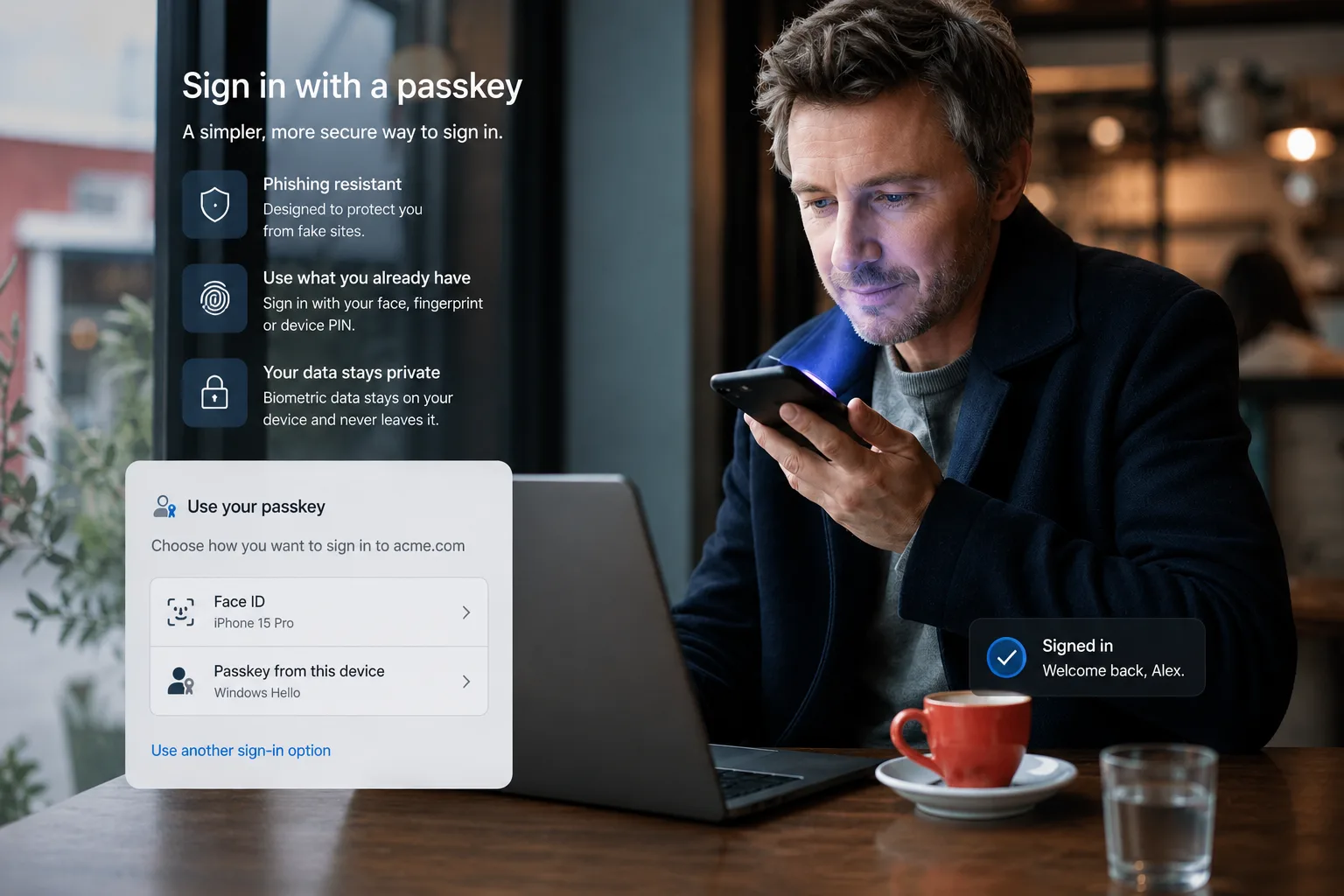
Passkeys have moved beyond early adoption. FIDO Alliance's 2026 research reports five billion passkeys in active use, while W3C published Web Authentication Level 3 as a Candidate Recommendation Snapshot in January 2026. The underlying proposition remains strong: public-key credentials scoped to a relying party can give people phishing-resistant authentication without sending a reusable password.
The implementation challenge is no longer whether a browser can create a credential. It is whether the complete account journey makes sense to a person across devices, upgrades, shared computers and stressful recovery moments.
Explain the benefit at the decision point
"Create a passkey" is technically accurate but may not answer the user's concern. Say what will happen: use the device's normal face, fingerprint or unlock method to sign in; biometric data stays with the device; and the user will not need to remember another password for that account.
Keep platform language consistent where possible. Avoid inventing a branded name that makes a standard capability feel proprietary.
Offer passkeys at moments of confidence
The best enrolment moment is often immediately after a successful password or multi-factor sign-in, when the account and device context are known. Make the call to action clear, but do not block the person's original task.
For new accounts, teams can consider passkey-first registration. The choice depends on audience, device support, assurance needs and recovery design. Measure completion and support contacts by device and browser rather than treating all users as one group.
Design recovery before promotion
Recovery is part of authentication security. A weak fallback can undo phishing resistance; an excessively strict fallback can lock out legitimate customers.
Map common cases:
- the passkey is synced and appears on a new device;
- the user has another registered authenticator;
- a cross-device sign-in is available;
- the device is lost and no passkey remains;
- an organisation-managed account changes owner or role;
- support must distinguish inconvenience from account takeover.
High-risk services may require multiple authenticators, stronger identity verification or an administrative recovery path. Whatever the model, explain it before the user loses access.
Keep account controls legible
People should be able to see where passkeys exist, add another, remove an old one and understand the consequence. Display meaningful device or provider context without exposing unnecessary fingerprinting data. Notify the account owner when a credential is added or removed.
During transition, avoid a confusing collection of password, email-link, SMS, authenticator-app and passkey buttons with no hierarchy. Recommend the strongest available path and keep alternatives deliberate.
Measure security and usability together
Track successful sign-in time, abandonment, recovery rate, fallback use and support burden alongside credential adoption. Watch for suspicious fallback patterns. Test with shared devices, accessibility tools and people who use multiple ecosystems.
Passkeys remove a difficult secret from the user's head. They do not remove the need for careful product judgement around identity, trust and recovery.